

Central serous retinopathy is a condition that can subtly affect the central portion of your vision. While it may develop quietly, understanding the underlying mechanisms and potential risk factors can help you take proactive steps for your eye health.
This article explores central serous retinopathy, including its development, diagnosis, risk factors, and key symptoms.
By gaining insight into this condition, you can engage in informed discussions with your eye professional and take a thoughtful approach to maintaining clear central vision.
What Is Central Serous Retinopathy?
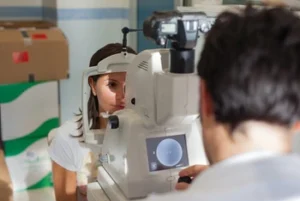 Central serous retinopathy (CSR), also referred to as central serous chorioretinopathy, is a condition that impacts the central portion of the retina. It is characterised by fluid accumulation beneath the retina, which can lead to changes in central vision.
While many cases resolve naturally, understanding the condition can help you recognise symptoms early and discuss management options with your eye care professional.
How Central Serous Chorioretinopathy Develops
CSR occurs when blood vessels in the choroid, the layer beneath the retina, allow fluid to accumulate under the central retina. This fluid can cause a small detachment of the retina, which may affect central vision.
Vascular endothelial growth factor and other growth factors regulate blood vessel function and fluid balance, which can influence the development of central serous retinopathy.
Common Risk Factors
Certain people are at a higher risk of developing central serous retinopathy. Risk factors include high stress levels, elevated corticosteroid use, and underlying systemic conditions such as hypertension.
Other risk factors may involve lifestyle factors, age, and gender, with adult males generally reporting more cases than females. Recognising your risk profile can support timely evaluation and management.
 Symptoms to Recognise
Symptoms of central serous include blurred or distorted central vision, a dark spot in the centre of your visual field, and difficulty perceiving fine details.
Some patients may notice changes in colour perception or a dimming sensation. Importantly, peripheral vision is typically unaffected.
Using Optical Coherence Tomography
Optical coherence tomography (OCT) is a primary diagnostic tool for central serous retinopathy. This non-invasive imaging technique allows clinicians to visualise fluid leakage and retinal detachment.
Additional assessments may be included to track blood vessel function and identify areas of fluid accumulation.
Observation and Monitoring
Many CSR cases resolve without intervention within several months. During this period, regular monitoring is essential.
Follow-up assessments help track changes in central vision and confirm that fluid leakage is diminishing. This approach allows eye doctors to determine if a different treatment is necessary.
Long-Term Considerations
While central serous retinopathy often resolves, some individuals may experience recurring episodes. Understanding your risk factors, lifestyle influences, and ongoing eye health can help reduce the likelihood of recurrence. Prompt evaluation of any new visual changes is advisable to ensure timely care.
Frequently Asked Questions
Are oral medications used for central serous retinopathy?
In some situations, oral medications may be considered to support the management of central serous retinopathy, particularly for persistent or recurrent cases. These medications aim to influence fluid accumulation and vascular function, and a qualified eye doctor should assess suitability.
 Can laser treatment help with central serous retinopathy?
Laser treatment, including argon laser photocoagulation, has been used in certain cases of central serous retinopathy to target areas of fluid leakage. Whether this approach is suitable depends on individual circumstances and should be discussed with an eye care professional.
How long does it take to recover vision?
Recovery varies; mild cases may improve within weeks, while persistent cases can take several months.
What is photodynamic therapy?
Photodynamic therapy is a treatment approach sometimes considered for persistent or recurrent central serous retinopathy. It involves using a light-activated medication to target specific blood vessels that may contribute to fluid leakage. Its suitability depends on individual circumstances and should be assessed by an eye care professional.
Conclusion
Central serous retinopathy is a condition that warrants awareness and timely assessment. By understanding the role of fluid leakage, blood vessels, and growth factors, you can engage in informed discussions with your eye care professional.
Treatment options are recommended depending on each patient’s case. Early recognition, regular monitoring, and collaboration with your eye doctor are key to supporting visual health and maintaining clarity in your central vision.
If you notice changes in your central vision or want to understand your risk of central serous retinopathy, our experienced eye care team is here to help.
Contact Dr Anton Van Heerden at 03 9000 0389 to schedule a consultation and discuss personalised options for monitoring and supporting your eye health.
Note: Any surgical or invasive procedure carries risks. Before proceeding, you should seek a second opinion from an appropriately qualified health practitioner.
References
Ebrahimiadib, N., Mirzaei, A., Esfandiarifard, S., Tuli, S., Najibzadeh, E., Fooladi, M. I., & Fadakar, K. (2023). Comparison of the Fluorescein Angiography-Guided and Indocyanine Green Angiography-Guided Photodynamic Therapy in the Treatment of Non-Resolving Central Serous Chorioretinopathy. Scientific Reports, 13(1), 1682. https://doi.org/10.1038/s41598-023-28890-9
Felton, A. (2024, August 23). What Is Central Serous Retinopathy? WebMD. Retrieved November 25, 2025, from https://www.webmd.com/eye-health/what-is-central-serous-retinopathy

For many people, living with blurred vision can be frustrating. Whether you wear glasses or contact lenses, the daily routine Read more

If you or someone you care about has been prescribed beta blockers as part of an eye care plan, you Read more

Sudden blurry vision in both eyes can be rather distressing. One moment, your vision is fine, and the next, the Read more

Blurry vision in one eye can be unsettling, especially when it appears suddenly. If you've found yourself asking why your Read more
Recent Comments