

If you have been researching ICL surgery cost, you have probably noticed one thing straight away: pricing can feel confusing. One clinic might quote a figure that sounds reasonable, while another seems dramatically higher.
The truth is, ICL surgery is an advanced form of refractive surgery, and the final cost of the surgery is shaped by far more than the implant itself. It depends on your prescription, your eye health, your surgeon’s expertise, and the technology used to achieve safe, long-term vision correction.
Let’s break it down in a clear, practical way, so you can understand the costs involved and feel confident asking the right questions.
What is ICL surgery, and why do many patients choose it?
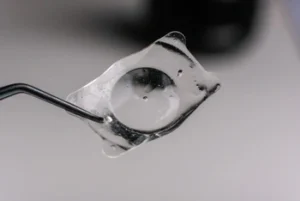 ICL surgery involves placing an implantable contact lens inside the eye, positioned behind the iris and in front of your natural lens. You may also see it called an implantable collamer lens, intraocular contact lens, or implantable collamer lens ICL.
Unlike laser eye surgery, which reshapes the corneal tissue, ICL surgery corrects vision by adding a lens rather than removing tissue. That is one reason many patients with thin corneas, higher prescriptions, or complex refractive errors consider it.
How it compares to glasses or contact lenses
If you are tired of glasses or contact lenses, ICL surgery can offer a more permanent solution. It is designed to correct myopia, and in some cases, astigmatism, helping you achieve clear vision without relying on corrective lenses every day.
The typical ICL surgery cost in Australia: what’s included?
When people search for ICL surgery costs, they often expect a single price. In reality, it is usually a package that includes multiple steps and services.
What a good quote usually covers
A comprehensive ICL quote often includes:
- Your initial consultation and suitability assessment
- Advanced diagnostic equipment scans and measurements
- The implantable collamer lens itself
- Surgeon experience and surgeon’s expertise
- The private day hospital or surgical facility fee
- Anaesthetist or sedation fees (if applicable)
- Post op eye drops
- Follow-up care and review appointments
Because it is a surgical procedure inside the eye, the environment and surgical techniques matter. You are paying for precision, safety, and a team that performs these advanced procedures routinely.
Key factors that affect ICL surgery cost
Several key factors can affect the final cost, even for patients with similar prescriptions.
Your prescription and refractive errors
Higher levels of refractive errors can require more specialised lens designs. If your goal is to correct high myopia, the implantable contact lens may cost more.
Surgeon experience and the clinic’s setup
A highly experienced eye surgeon may charge more, and this is not necessarily a bad thing. Surgeon experience can influence safety, planning, and the smoothness of the eye surgery process.
A well-equipped laser eye clinic with the latest technology and high-quality diagnostic equipment may also charge higher fees due to the investment in precision tools.
The type of technology used
Even though ICL surgery is not the same as laser surgery, many clinics combine diagnostics and planning with modern tools such as a femtosecond laser, particularly when managing laser procedures for other vision correction pathways.
How does ICL compare to the cost of laser eye surgery?
Many people compare ICL to eye laser surgery, and it is a fair question.
ICL vs LASIK laser eye surgery
LASIK laser eye surgery reshapes the corneal tissue. It is often chosen for mild to moderate prescriptions, depending on corneal thickness.
If you are comparing ICL surgery cost with lasik cost, ICL can sometimes be higher because it involves a lens implant and intraocular surgical work, rather than reshaping the cornea.
ICL vs PRK eye surgery
PRK eye surgery is another option that works on the surface of the cornea and can suit some patients with thin corneas. It is often cheaper than ICL, but recovery can be slower, and there may be more discomfort and reliance on eye drops early on.
ICL vs refractive lens exchange
Refractive lens exchange replaces your natural lens and is sometimes considered in older patients or those with early cataract treatment needs. This can be a different cost category entirely, especially if cataract treatment is part of the plan.
Does private health insurance cover ICL surgery?
This is one of the most important questions to ask early.
 In most cases, ICL is considered elective vision correction, which means private health insurance may not cover the implantable collamer lens ICL itself. However, some private health insurance policies may offer partial cover for:
- Private day hospital fees
- Theatre costs
- Inpatient accommodation
- Certain medical item numbers
This depends heavily on your health fund and your level of cover. It is worth checking private health insurance policies directly, because the difference between policies can be significant.
When comparing the cost of laser or ICL, be wary of quotes that seem cheap but omit essential details.
- Extra diagnostic testing
- Additional follow-up care beyond a short window
- Post op medications and eye drops
- Enhancement procedures, if required
- Out of hours reviews if complications arise
A quality clinic will clearly explain these costs so you are not caught off guard.
Can interest-free payment plans make ICL more affordable?
Yes, and for many patients, this is a realistic way to proceed.
Some clinics offer interest-free payment plans, which can spread the surgery cost over time. This can make vision correction more accessible, especially if you are currently paying ongoing expenses for contact lenses, glasses or contact lenses, and regular optometry updates.
How to get an accurate quote: start with the initial consultation
Because every eye is different, the best way to understand the ICL surgery cost is to book an initial consultation. This is where your surgeon assesses your eye health, maps your corneal tissue, measures your natural lens position, and determines whether ICL is the safest option.
Some clinics also offer a free assessment, but it is important to confirm whether it includes full diagnostic testing or just a basic screening.
Final thoughts: Is ICL surgery worth the cost?
 For the right candidate, ICL surgery can be a highly rewarding long-term solution. It corrects vision without removing corneal tissue, offers stable outcomes for many patients, and can be a strong option when laser vision correction is not suitable.
If you want the best value, focus less on the cheapest quote and more on safety, the surgeon’s expertise, the technology used, and the quality of follow-up care. Those details are often what separate a good experience from a stressful one.
If you are considering ICL surgery and want clear advice based on your particular circumstances, booking an initial consultation is the best next step. To discuss ICL surgery cost, suitability, and your vision correction options, contact Dr Anton Van Heerden on 03 9000 0389.
Note: Any surgical or invasive procedure carries risks. Before proceeding, you should seek a second opinion from an appropriately qualified health practitioner.
References
Mayo Clinic. (2025, July 16). LASIK eye surgery. https://www.mayoclinic.org/tests-procedures/lasik-eye-surgery/about/pac-20384774
EyeWiki. (n.d.). Implantable Collamer Lens. https://eyewiki.org/Implantable_Collamer_Lens
Cleveland Clinic. (n.d.). Myopia (nearsightedness): Causes, symptoms and treatment. https://my.clevelandclinic.org/health/diseases/8579-myopia-nearsightedness

For many people, living with blurred vision can be frustrating. Whether you wear glasses or contact lenses, the daily routine Read more

If you or someone you care about has been prescribed beta blockers as part of an eye care plan, you Read more

Sudden blurry vision in both eyes can be rather distressing. One moment, your vision is fine, and the next, the Read more

Blurry vision in one eye can be unsettling, especially when it appears suddenly. If you've found yourself asking why your Read more
Recent Comments