

Cataract surgery is a commonly performed procedure worldwide, offering a pathway to restore vision affected by a cloudy lens. A crucial decision during this process is selecting the right intraocular lens (IOL). Understanding the 3 types of cataract lenses can help you achieve your vision goals, whether that involves clear distance vision, near focus, or vision at multiple distances.
In this article, we tackle the main options, their benefits, and considerations to help you make a decision about your eye health.
Understanding Cataract Surgery and Intraocular Lenses
Cataracts occur when the eye’s natural lens becomes cloudy, affecting your ability to see clearly. During cataract surgery, this natural lens is replaced with an artificial lens, also known as an intraocular lens (IOL). The type of IOL chosen plays a crucial role in determining your visual outcomes.
Modern IOLs are designed not only to restore clear vision but also to address pre-existing eye conditions, astigmatism, and specific vision needs. Selecting the right lens requires understanding how each lens functions and which option aligns with your vision goals.
Types of Cataract Lenses
When considering cataract surgery, one important decision is selecting the right intraocular lens (IOL). The type of IOL can influence whether you achieve clear distance vision, vision at multiple distances, or reduced dependence on visual aids.
The 3 primary options, monofocal, multifocal, and extended depth of focus (EDOF), each have unique advantages based on your visual needs.
Monofocal Lenses
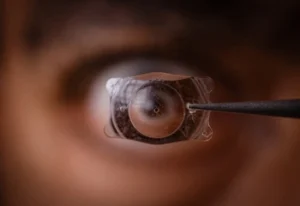 Monofocal IOLs are commonly used lenses in cataract surgery. These lenses have a single focusing power, typically optimised for distance vision, providing clear distance vision for everyday activities.
Monofocal lenses are particularly well-suited for individuals whose vision needs are straightforward or who have certain pre-existing eye conditions.
Many patients report reliable good vision even in low-light conditions, making monofocal lenses a practical choice for those prioritising one focusing distance without complex lens designs.
Multifocal Lenses
For patients seeking vision at multiple distances, multifocal IOLs offer a versatile solution. These lenses contain different zones that allow the eye to focus on near, intermediate, and distance vision simultaneously.
The focal point of a multifocal lens is split across multiple focusing powers, which can enhance vision for activities such as computer work, driving, and reading without glasses. Multifocal lenses are particularly suited for individuals with active lifestyles who want freedom from contact lenses or reading glasses.
It is important to note that adaptation may be required, particularly in low-light conditions, as the eye becomes accustomed to the different zones. Despite this, multifocal lenses can significantly improve visual outcomes across multiple distances.
Extended Depth of Focus (EDOF) Lenses
Extended depth of focus (EDOF) lenses, also called extended depth lenses, provide a continuous range of vision from distance to intermediate, offering a smoother transition than traditional multifocal lenses.
These lenses extend the focal point, reducing the need for glasses for intermediate tasks while maintaining good distance vision. EDOF lenses are ideal for activities such as computer work or other tasks that require medium-range focus, and they provide a more natural visual experience for daily use.
Patients seeking clear vision at various distances with minimal visual disturbances may find EDOF lenses an effective option.
Frequently Asked Questions
 What are toric lenses, and who can benefit from them?
Toric lenses, also known as toric IOLs, are specially designed intraocular lenses that correct astigmatism in addition to replacing a cloudy lens during cataract surgery. They provide clear distance vision and can reduce the need for glasses caused by corneal irregularities.
Toric lenses are available in both monofocal and multifocal designs, allowing flexibility based on individual vision goals. Patients with an astigmatic eye who want to achieve optimal visual outcomes without glasses are ideal candidates.
How do I choose the right lens for my vision goals?
Selecting the right IOL depends on several factors, including your visual needs, pre-existing eye conditions, and lifestyle. Consider the following:
- Do you prioritise distance vision for driving or outdoor activities?
- Are you looking for vision at multiple distances to reduce the need for glasses?
- Do you have astigmatism or other eye conditions that require specific lens designs?
- Will low-light conditions or computer work affect your lens choice?
A detailed consultation with your ophthalmologist can help identify the IOL type that aligns with your vision goals, ensuring clear vision and optimal visual outcomes.
What is the difference between multifocal IOLs and EDOF lenses?
Both multifocal IOLs and EDOF lenses are designed to provide vision at more than one distance, but they work differently. Multifocal IOLs have distinct zones on the lens for near, intermediate, and distance vision, which allows the eye to switch between different focusing powers. This can sometimes cause halos or glare, especially in low-light conditions, as the eye adapts to the multiple zones.
EDOF lenses (extended depth of focus) create a single, elongated focal point that provides a continuous range of vision from distance to intermediate distances, with a smoother transition between them. They are less likely to cause visual disturbances, making them a good option for patients who want clear intermediate vision.
Will I still need to wear glasses after cataract surgery?
Your need for glasses depends on the type of IOL chosen. Monofocal lenses often require reading glasses, whereas multifocal and EDOF lenses may reduce the dependence on glasses for multiple tasks.
What should I expect during cataract surgery recovery?
Recovery from cataract surgery usually involves a brief period of visual adaptation as your eye adjusts to the artificial lens. Most patients notice improved vision within a few days, although full recovery may take several weeks. Following post-operative instructions and attending follow-up visits are essential to ensure optimal visual outcomes.
Conclusion
 Understanding the 3 types of cataract lenses allows you to make an informed decision about your vision correction during cataract surgery. Whether you prioritise clear distance vision, vision at multiple distances, or astigmatism correction, modern intraocular lenses offer options to match your vision needs.
By consulting with your ophthalmologist and carefully evaluating your vision goals, lifestyle, and pre-existing eye conditions, you can select the right lens to achieve good vision and minimise dependence on glasses, making everyday activities more comfortable.
Choosing the right IOL is a crucial step in restoring your vision quality and maintaining long-term eye health.
Your vision is unique, and choosing a suitable IOL can make a significant difference in achieving your vision goals. Whether you are considering monofocal, multifocal, or EDOF lenses, our experienced ophthalmologists are here to guide you every step of the way.
Book a personalised consultation with Dr Anton Van Heerden at 03 9000 0389 to discuss your visual needs, explore cataract lenses, and find the lens that suits your lifestyle. Take the first step towards comfortable vision and discover the options available for your eyes.
Note: Any surgical or invasive procedure carries risks. Before proceeding, you should seek a second opinion from an appropriately qualified health practitioner.
References
Bedinghaus, T. (2025, June 13). Multifocal Intraocular Lenses for Cataract Surgery. Verywell Health. Retrieved December 12, 2025, from https://www.verywellhealth.com/intraocular-contact-lenses-3421653
Bhowmik, S. (2025, March 23). Why You Might Need Cataract Surgery—and What To Expect. Health. Retrieved December 12, 2025, from https://www.health.com/cataract-surgery-8786500
Reddy, N. (2025, October 10). Intraocular Lens (IOL) Implants: A Guide to Types, Costs, and More. GoodRx. Retrieved December 12, 2025, from https://www.goodrx.com/health-topic/eye/premium-lenses-for-cataract-surgery


Recent Comments