

When you are thinking about laser vision correction, one question often comes up first: Does LASIK hurt?
Laser-assisted in situ keratomileusis (LASIK) eye surgery involves reshaping corneal tissue with laser technology, so it is reasonable to want clear details about what you may feel during and after the procedure. Many people want to understand how numbing drops work, whether pressure is expected, and how long any discomfort may last.
Understanding what actually occurs during LASIK surgery and how it typically feels can help you approach the process with greater clarity. Clear expectations also make it easier to prepare, ask the right questions, and recognise what is typical during recovery.
In this guide, you will learn what patients experience during the LASIK procedure, how discomfort is managed, what the first few hours entail, and how recovery typically progresses.
Does LASIK Surgery Hurt During the Procedure?
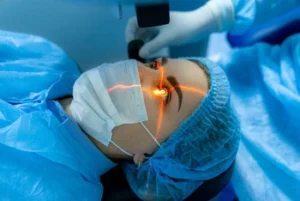 Many people considering LASIK eye surgery ask whether the procedure will hurt. It is a fair and important concern. Your eyes are sensitive, and any eye surgery can sound intimidating at first.
However, modern laser eye surgery uses advanced laser technology and carefully applied numbing drops to help keep you comfortable throughout the surgical procedure. You may notice light pressure, but not sharp pain.
Your eyes will be fully prepared with anaesthetic eye drops before anything begins. These numbing drops reduce sensation on the ocular surface.
What You May Feel During LASIK Eye Surgery
During LASIK, your surgeon carefully creates a thin flap in the cornea. This part of the procedure is quick and highly controlled.
You may notice a brief, gentle pressure while the flap is being created. Many patients describe this sensation as a soft push or firm touch that lasts only a few seconds. Severe pain is not the norm, thanks to modern laser technology and carefully applied numbing drops.
Bright lights from the surgical equipment are another part of the process. These lights are essential for alignment and are completely normal. Patients can become accustomed to them, and your surgeon will guide you through each step so you always know what to expect.
By understanding these sensations in advance, you can feel more comfortable during the procedure, knowing that mild pressure and temporary bright lights are expected and well-managed.
Is LASIK Eye Surgery Painful After It’s Finished?
After LASIK surgery, it’s normal to notice mild discomfort as the numbing drops gradually wear off. This is not a sign that something is wrong; it’s simply your eyes adjusting to the early stages of healing.
You may experience mild irritation, watery eyes, or a gritty sensation, similar to having a tiny bit of dust in your eyes. However, every patient’s recovery is slightly different.
Most of these sensations settle within a few hours with rest and the use of lubricating eye drops. Taking a short break, keeping your eyes closed whenever possible, and following your surgeon’s post-procedural instructions can help you feel comfortable and facilitate early recovery.
Knowing what to expect after surgery can give you clarity, allowing you to focus on recovery.
The First Few Hours After LASIK Eye Surgery
The first few hours are focused on rest and protection. Your vision may be hazy at first, and light sensitivity is common.
You’ll be advised to rest at home with your eyes closed whenever possible. Avoid screens and bright environments during this period.
You may notice clearer vision beginning on the same day, although vision can continue to stabilise over the next few weeks.
Recovery Over the Next Few Weeks
Recovery from LASIK surgery is usually steady and monitored through follow-up appointments. These visits allow your eye surgeon to assess healing and monitor your ocular health.
You may continue using lubricating eye drops for several weeks. This helps manage dryness and supports the corneal flap during its settling.
Some patients experience light sensitivity or mild visual fluctuations during this period. This is usually temporary.
Avoid rubbing your eyes and wearing eye makeup for the duration your surgeon recommends.
How Surgeons Assess Your Suitability
A detailed eye exam is the first step before any LASIK procedure. Your experienced surgeon checks your corneal thickness, eye health, and prescription stability.
This exam helps identify factors such as thin corneas, dry-eye risk, and other concerns. Not all patients are suitable for LASIK surgery.
If LASIK is not appropriate, other refractive surgery options may be discussed. The goal is suitable vision correction.
This assessment process supports informed decisions and realistic expectations.
LASIK vs Glasses and Contact Lenses
 People often compare LASIK eye surgery with the ongoing use of glasses or contact lenses. Each option has benefits and limits.
Contact lenses can sometimes cause dryness or irritation for some patients. Glasses may be inconvenient for certain work or lifestyle needs.
LASIK surgery aims to reshape the cornea to improve vision without daily lenses and is one of several laser eye surgery options.
Your choice should be based on clinical advice, personal preference, and a full understanding of benefits and risks.
Frequently Asked Questions
Are you awake during LASIK eye surgery?
Yes, you remain awake throughout the procedure. Being awake allows your surgeon to monitor eye movements. Many patients feel comfortable once the numbing drops take effect.
Does LASIK hurt more for older patients?
Age does not significantly affect sensation during LASIK. Everyone’s experience is unique, but the combination of modern laser technology and anaesthetic drops minimises discomfort, regardless of age.
Does LASIK hurt if enhancement is needed later?
Enhancement procedures are generally very similar to your initial surgery, using the same numbing drops. Patients report only mild, temporary discomfort that is managed with lubricating drops.
Conclusion
If you are asking whether LASIK hurts, it is helpful to consider the full picture. LASIK eye surgery employs modern technology, anaesthetic eye drops, and careful planning to support your comfort.
Most patients describe the LASIK procedure as brief, with slight pressure and mild discomfort. The first few hours after treatment are closely managed with eye drops and rest.
 A proper eye exam, clear guidance, and care from an experienced surgeon all contribute to a well-managed experience. If you are exploring vision correction, a personalised consultation is the optimal next step to learn what suits your needs.
If you’re considering LASIK and want personalised guidance, our experienced eye surgeons are here to answer your questions and help determine a suitable approach for your eyes.
Schedule a consultation with Dr Anton Van Heerden on 03 9000 0389 to discuss your suitability, understand the procedure, and gain clarity in a professional and supportive environment.
Note: Any surgical or invasive procedure carries risks. Before proceeding, you should seek a second opinion from an appropriately qualified health practitioner.
References
Hennig, C. (2024, May 24). Does Laser Eye Surgery Hurt? Find Out What to Expect. GoodRx. Retrieved February 18, 2026, from https://www.goodrx.com/health-topic/eye/does-laser-eye-surgery-hurt
Lipner, M. (2025, December 11). LASIK Eye Surgery: Factors to Consider. Verywell Health. Retrieved February 18, 2026, from https://www.verywellhealth.com/lasik-eye-surgery-7553679
Rowden, A. (2024, January 29). What to Know About LASIK Recovery and Side Effects. Medical News Today. Retrieved February 18, 2026, from https://www.medicalnewstoday.com/articles/what-to-know-about-lasik-recovery-and-its-effects


LASIK eye surgery is a popular form of refractive surgery, a category of eye procedures designed to surgically correct the Read more

In the past, people with any significant degree of astigmatism were excluded from laser eye surgery, leaving only glasses or Read more

Recent Comments